
Preparation Is the Key to Interview Success
An interview is your opportunity to connect your skills, experiences, and career goals to what an employer or graduate program is looking for. Preparation can help you feel more confident, communicate your qualifications clearly, and avoid common interview pitfalls.
The Mississippi State University Career Center provides resources to help you research your organization, develop your personal pitch, answer behavioral questions, strengthen your professional presence, and follow up after the interview.
Use the resources below to prepare, practice, and make a strong impression.

Research the Employer or Graduate Program
Before your interview, take time to understand who you are meeting with and what they do
Tip: Connect what you learn during your research to your own skills and experiences. Be prepared to explain why you are interested in this opportunity.

Research:
- The organization’s mission, values, and current priorities
- The position or graduate program
- Products, services, research, or programs
- Recent news or developments
- Skills and qualifications listed in the position description
- The department, team, or faculty you may work with
Prepare Your “Tell Me About Yourself” Answer
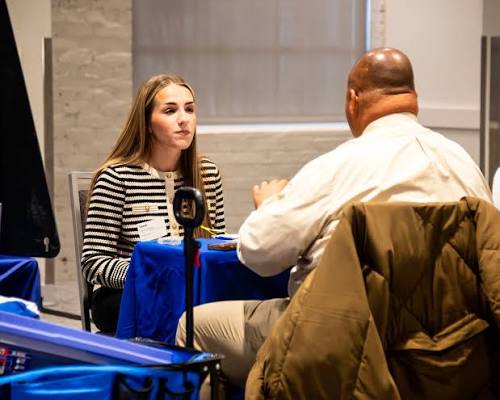
“Tell me about yourself” is one of the most common opening interview questions—and it is not an invitation to tell your entire life story. Think of your response as a professional introduction that connects: Who you are → What you’ve done → What you can offer → Where you’re going
A strong response might include:
- Your major or current role
- Relevant experience
- Key skills or areas of interest
- Why you are interested in the opportunity
Keep it focused. Aim for approximately 60–90 seconds.
Avoid:
- Reading your resume word-for-word
- Sharing unrelated personal information
- Listing every experience you’ve ever had
- Talking so long that the interviewer has to rescue you
Develop Your Elevator Pitch
Your elevator pitch is a brief introduction you can use when meeting employers, networking, attending career fairs, or beginning an interview. A simple formula: Who I am + What I do + What I’m interested in + What I’m looking for
Tip: Practice until your introduction sounds natural—not memorized

Example:
- “I’m a junior at Mississippi State studying forestry with experience in forest inventory and GIS.
- I’m particularly interested in natural resource management, and I’m looking for an internship where I can apply my field and technical skills.”
Prepare for Common Interview Questions
You cannot predict every question you will receive, but you can prepare for many of the questions employers and graduate programs commonly ask.
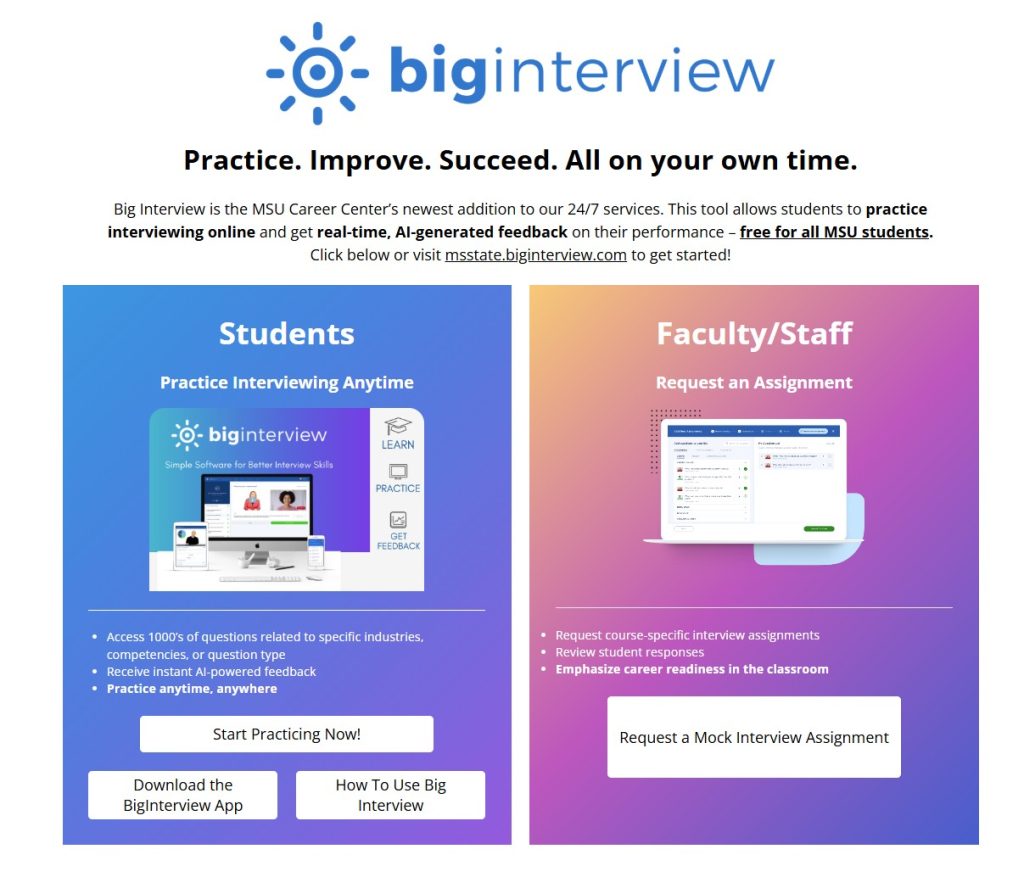
Practice questions such as:
- Tell me about yourself.
- Why are you interested in this position?
- Why do you want to work for our organization?
- What are your strengths?
- What is an area you are working to improve?
- Tell me about a challenge you faced.
- Tell me about a time you worked on a team.
- Why should we select you?
- What are your career goals?
- Do you have any questions for us?
Behavioral Interview Questions
Use the STAR Method
Behavioral questions ask you to describe what you actually did in a past situation.
The STAR Method provides a simple structure for answering behavioral interview questions.


You may hear:
- “Tell me about a time you had to solve a difficult problem.”
- “Describe a time you worked with someone who had a different perspective.”
- “Tell me about a time you made a mistake.”
- “Give me an example of a time you demonstrated leadership.”
Remember: Focus on You:
- Use “I” to clearly explain your contribution rather than relying primarily on “we.”
- Instead of : “We completed the project.”
- Try: “I analyzed the data and created the report that our team used to present our findings.”
What Are Employers Listening For?
Interviewers are evaluating more than whether you can answer the question. Connect Your Answer to the Position. Don’t just tell an interviewer what happened. Help them understand why it matters. A strong answer connects: Your experience → Your skills → The position

They are listening for evidence of:
- Communication
- Problem-solving
- Teamwork
- Leadership
- Adaptability
- Professionalism
- Technical knowledge
- Initiative
- Accountability
- Career readiness
.


